

 AliShokoohi.est
Steel angle production standards define the technical limits that a hot-rolled L-section must satisfy in terms of leg dimensions, thickness, angle geometry, length, straightness, mass, surface condition and manufacturing tolerances. A product is not standard simply because it looks like an L or carries a nominal size on an invoice; its actual geometry and traceable quality data must comply with the referenced specification.
For industrial buyers, fabricators and quality-control teams, it is important to distinguish between a product standard, a dimensional standard and a steel-grade standard. This guide explains the role of INSO 13968-1, ISO 657-1:2026 and EN 10056-1/2, and shows how dimensions, mass, geometry, surface condition and traceability are checked.
What do steel angle production standards control?
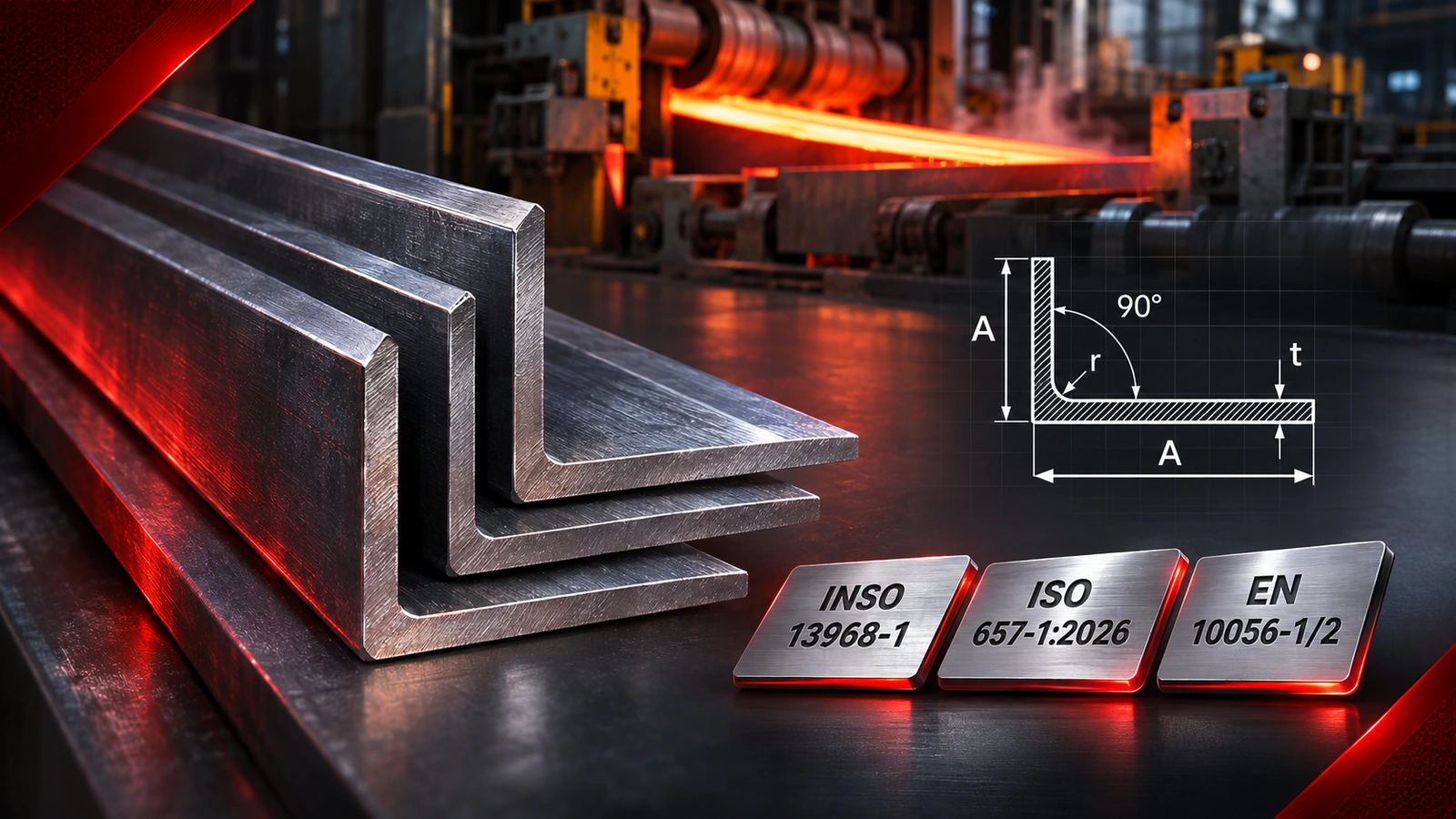
A production standard establishes the permitted difference between nominal and actual values. Leg width, thickness, root radius, out-of-square, straightness, ordered length and mass per unit length are typical parameters covered by dimensional standards or their companion tolerance documents.
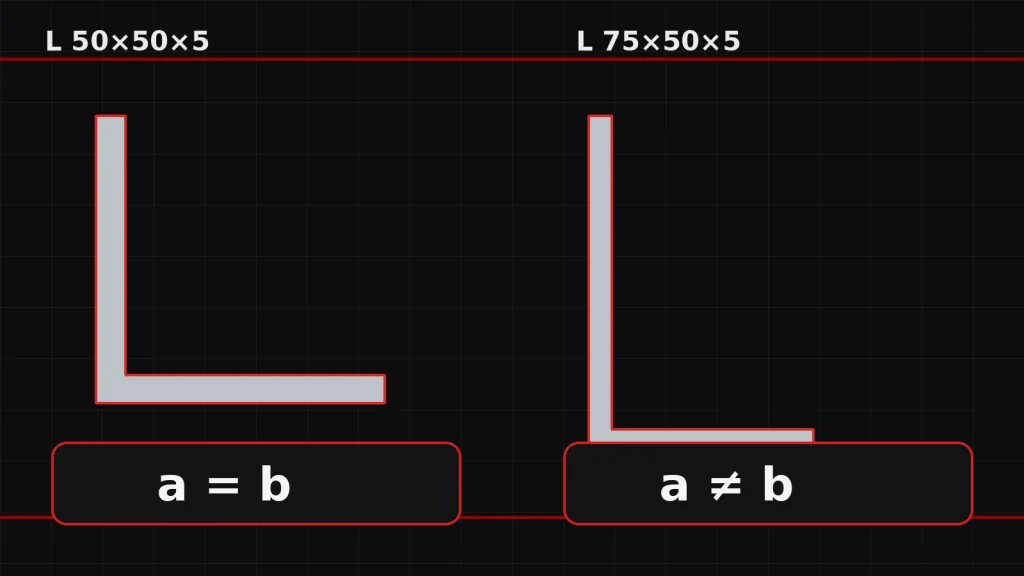
Equal-leg angles are identified by one nominal leg dimension, whereas unequal-leg angles require both leg dimensions to be specified. For a detailed comparison of the two geometries, see equal vs unequal leg steel angles.
INSO 13968-1 in the Iranian market
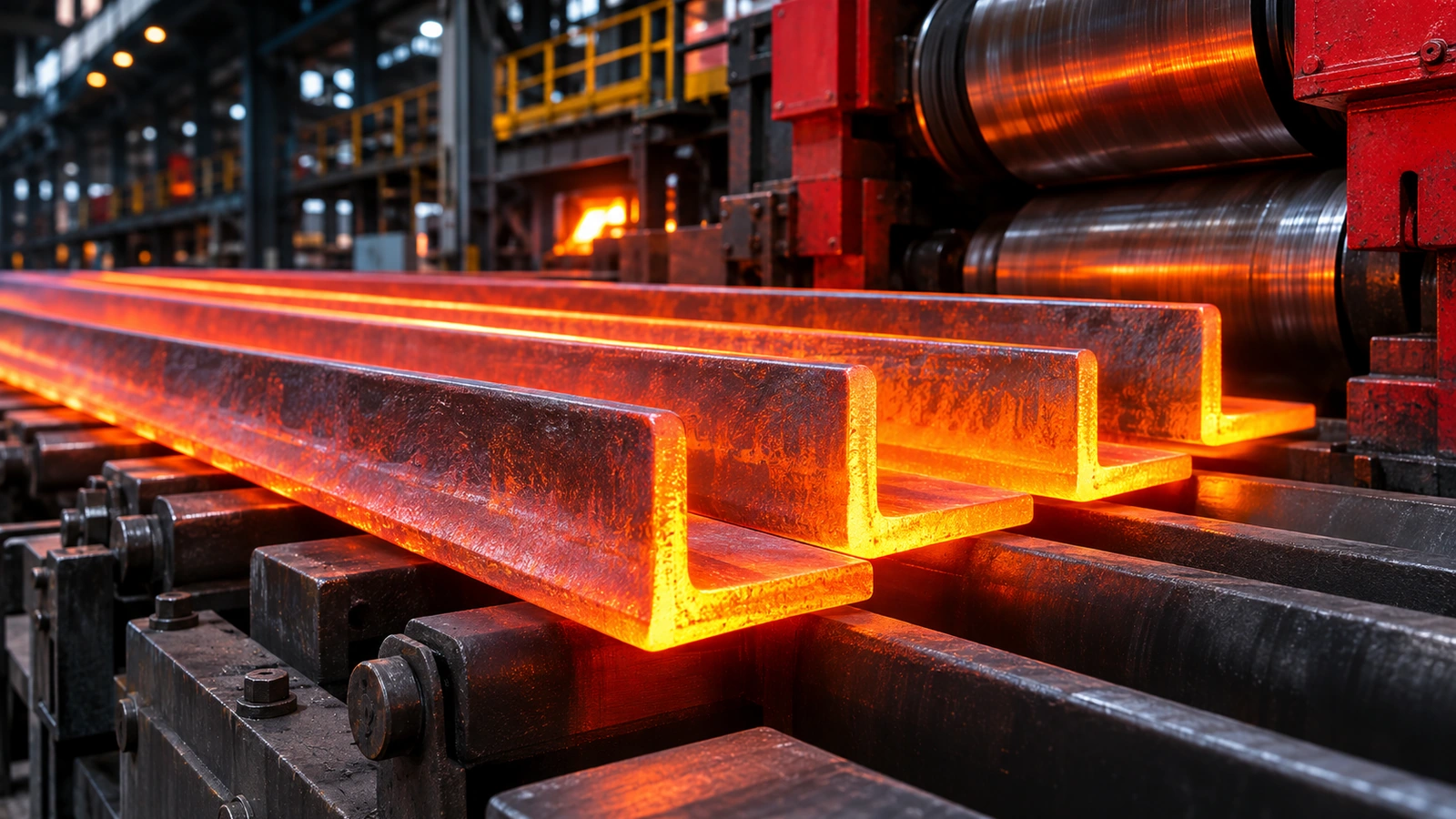
INSO 13968-1 is widely referenced in Iran for hot-rolled equal-leg steel angles. Its practical value is to provide manufacturers, sellers and buyers with a common technical framework for dimensions, section geometry and acceptable production variation.
A statement such as “manufactured to standard” should always be accompanied by the real product data: nominal size, thickness, piece length, approximate mass, section type and, where necessary, quality documentation. You can review NFPK steel angle products for available angle products and What is a steel angle? for a basic introduction to the section.
ISO 657-1:2026: the updated international reference
ISO 657-1:2026 was published in 2026 and covers dimensions, sectional properties and tolerances for hot-rolled sections including equal-leg and unequal-leg angles. For new technical documents, the edition year should be identified because the same standard number may be revised over time.
The 2026 edition reorganizes the older ISO 657 family and consolidates information previously distributed across separate parts. Procurement specifications should therefore state exactly which edition is being applied.
What is the difference between EN 10056-1 and EN 10056-2?
Within the European system, EN 10056-1:2017 specifies nominal dimensions for hot-rolled structural equal and unequal leg angles. EN 10056-2 addresses tolerances on shape, dimensions and mass.
These documents should not be confused with steel-grade standards. A dimensional standard defines section geometry and tolerances, while mechanical properties, chemical composition and delivery conditions may be controlled by other standards such as the EN 10025 family.
What is dimensional tolerance?
Industrial hot rolling cannot produce every piece with mathematically zero deviation from the nominal value. Standards therefore define acceptable limits. Small variations in leg width, thickness, length, straightness and mass can be normal as long as they remain inside the permitted range.
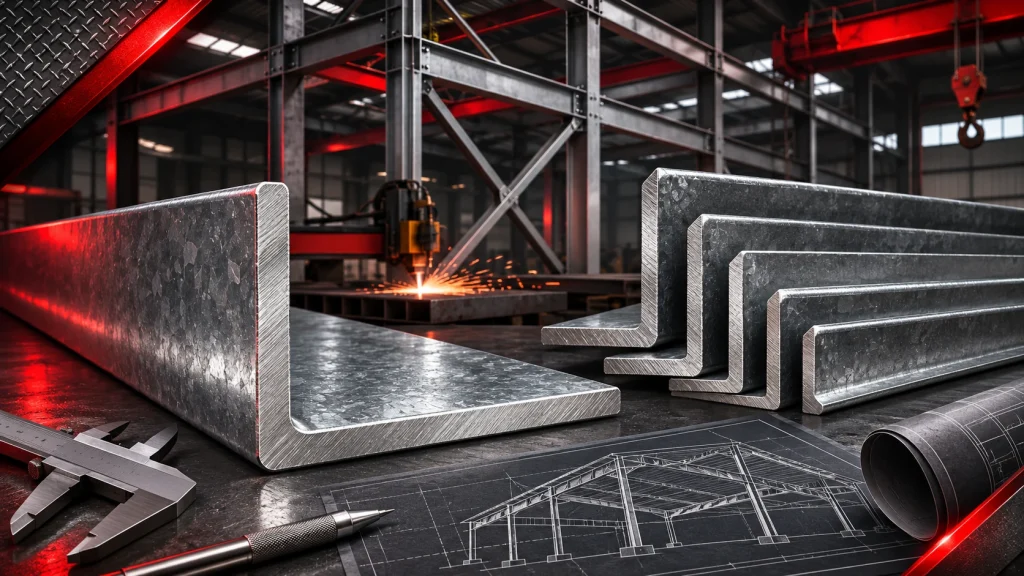
Tolerances also affect fabrication. Excessive deviation can create problems during assembly, welding, drilling, bolted connection work and alignment, which is why measurement with suitable tools is a core part of quality control.
Checking the 90-degree geometry and straightness
The relationship between the two legs is a major quality characteristic. Excessive out-of-square can prevent proper contact with plates or adjacent components and make connection fabrication more difficult.
Straightness must also be checked along the piece. An angle may have acceptable leg width and thickness but still be unsuitable if longitudinal bow or twist exceeds the permitted tolerance.
Steel angle mass and its relationship to standards
Mass is an important verification parameter but should never be used alone to determine conformity. Theoretical mass is calculated from section area and steel density, while actual mass can be influenced by permitted manufacturing tolerances, fillet geometry and dimensional variation.
For this reason, mass should be evaluated together with leg width, thickness, length and section type. The guide light vs heavy steel angles explains the distinction between light and heavy angle terminology in greater detail.
Surface quality of hot-rolled angles
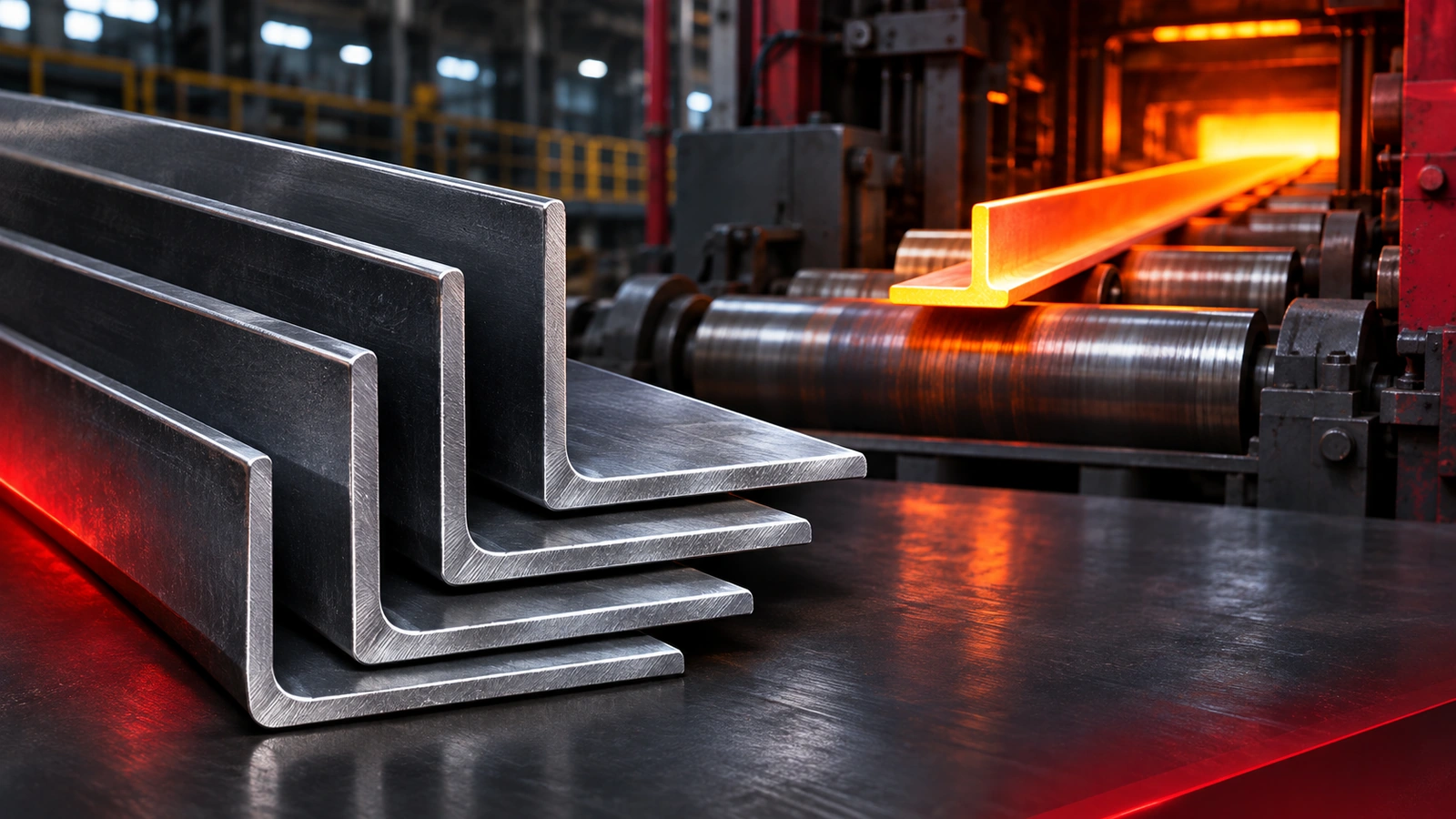
A hot-rolled steel surface is not expected to look like polished cold-finished steel, and mill scale is a normal consequence of high-temperature rolling. However, serious cracks, unacceptable separation, deformation or defects that interfere with use, welding or coating should be identified during inspection.
Where painting, galvanizing, precision welding or protective coating is important, the surface should be evaluated before the next process. The purchasing specification determines the acceptable defect level.
Certificates, traceability and product approvals
Quality control goes beyond measuring a single piece. For industrial orders, traceability may be required and technical documentation can include section designation, size, thickness, steel grade, heat or batch number, inspection results and production information.
Published company documentation can be reviewed through NFPK product certifications, which provides a direct route to product certifications and related records.
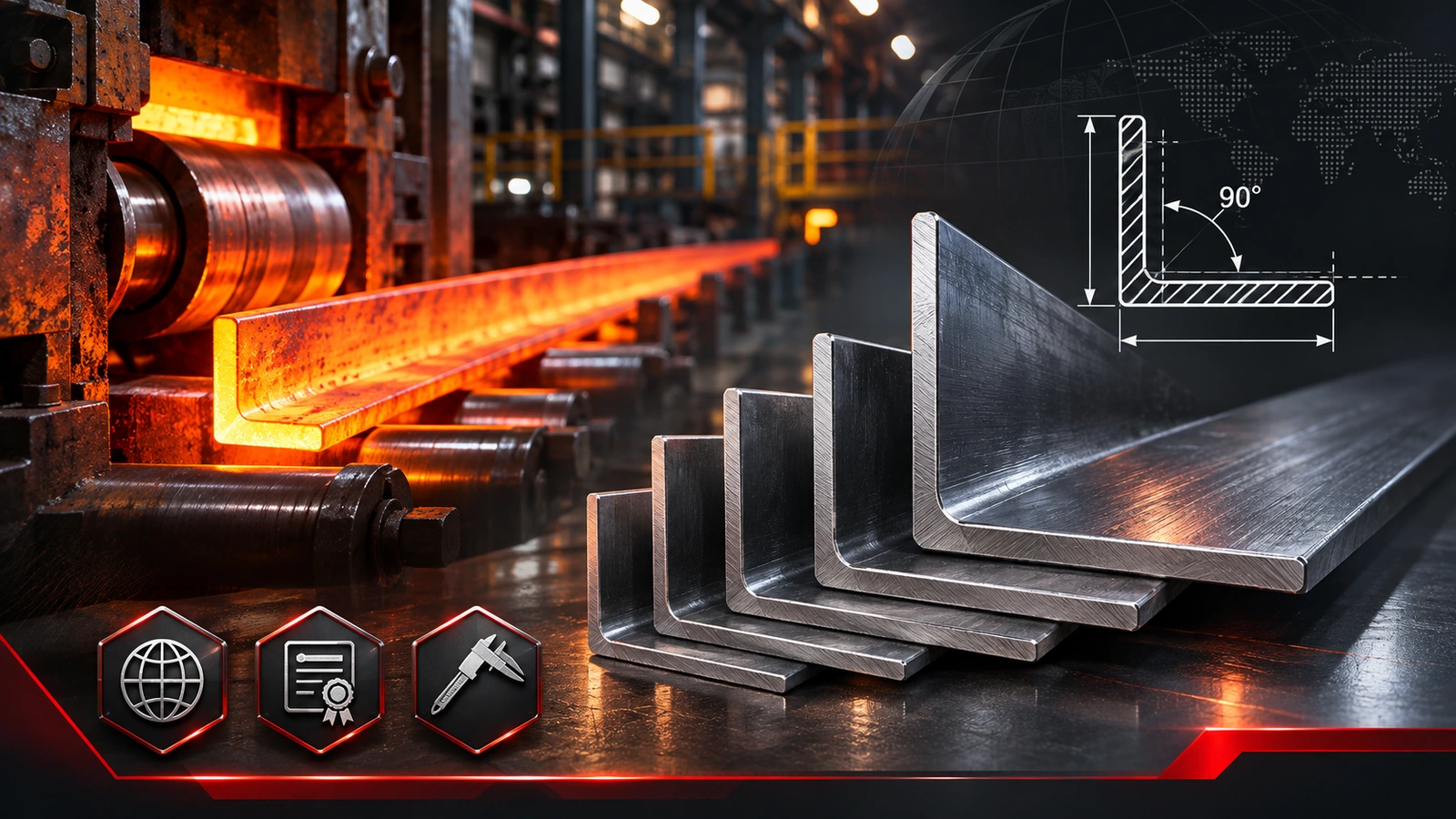
Typical quality-control sequence for a standard angle
- Verify raw material and heat or batch information.
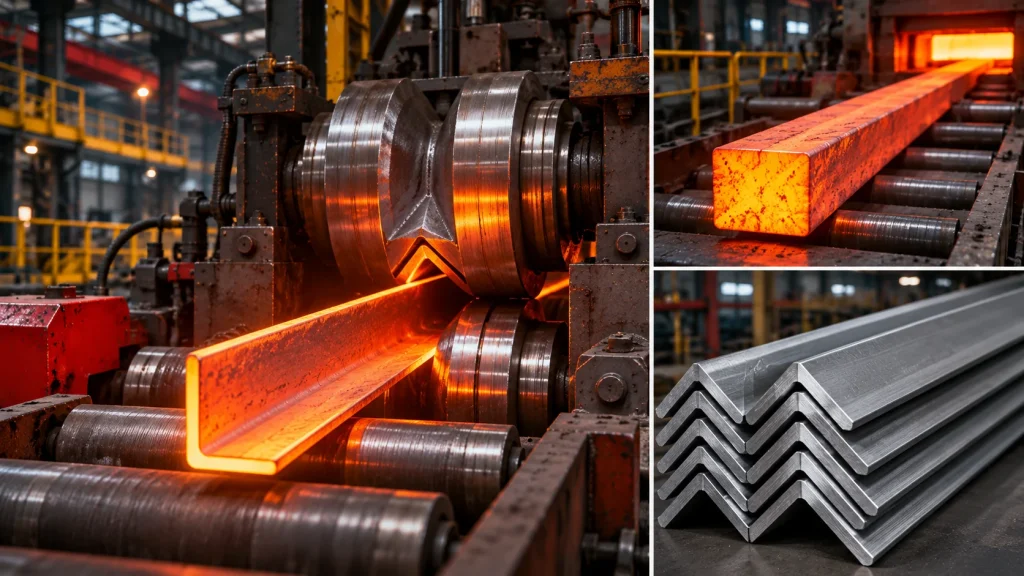
- Control rolling temperature and section formation.
- Measure leg width, thickness and section geometry.
- Check out-of-square, straightness and piece length.
- Verify mass against the permitted range.
- Inspect surface condition and visible defects.
- Record traceability information and issue required documents.
For the manufacturing process itself, see steel rolling process.
What should buyers verify before ordering?
- Equal-leg or unequal-leg configuration;
- nominal dimensions and required thickness;
- piece length and quantity;
- approximate mass and final shipment weight;
- referenced dimensional standard and edition where contractually important;
- steel grade and material standard for engineering projects;
- surface condition, straightness and section geometry;
- traceability or certification documents for critical orders.
For purchasing planning, review steel angle buying guide and contact NFPK sales team for current availability and commercial details.
Frequently asked questions
What is the latest ISO standard related to hot-rolled steel angles?
ISO 657-1:2026 is the current international reference covering dimensions, sectional properties and tolerances for equal and unequal hot-rolled angles.
What is the difference between EN 10056-1 and EN 10056-2?
EN 10056-1 defines nominal dimensions, while EN 10056-2 covers tolerances on shape, dimensions and mass.
Does a different weight automatically mean the angle is non-standard?
No. Mass must be checked together with dimensions, thickness and the permitted tolerance range; limited variation can still comply with the standard.
Is a dimensional standard the same as a steel-grade standard?
No. One controls geometry and tolerances, while another may define mechanical properties, chemistry or delivery conditions.
Where can NFPK product approvals be reviewed?
They can be accessed through NFPK product certifications.
Conclusion
Steel angle production standards provide the technical basis for comparing and verifying products. INSO 13968-1 is an important Iranian reference, ISO 657-1:2026 provides a current international framework, and EN 10056-1/2 are major European dimensional references.
For an actual project, dimensional compliance, steel grade, design requirements and the purchasing specification should be evaluated together. Reliable procurement depends on checking dimensions, thickness, angle geometry, straightness, surface condition, mass and traceability rather than relying on nominal size alone.

Comments
0